A Game Ranking Needs a Method, Not Just a Hot Take

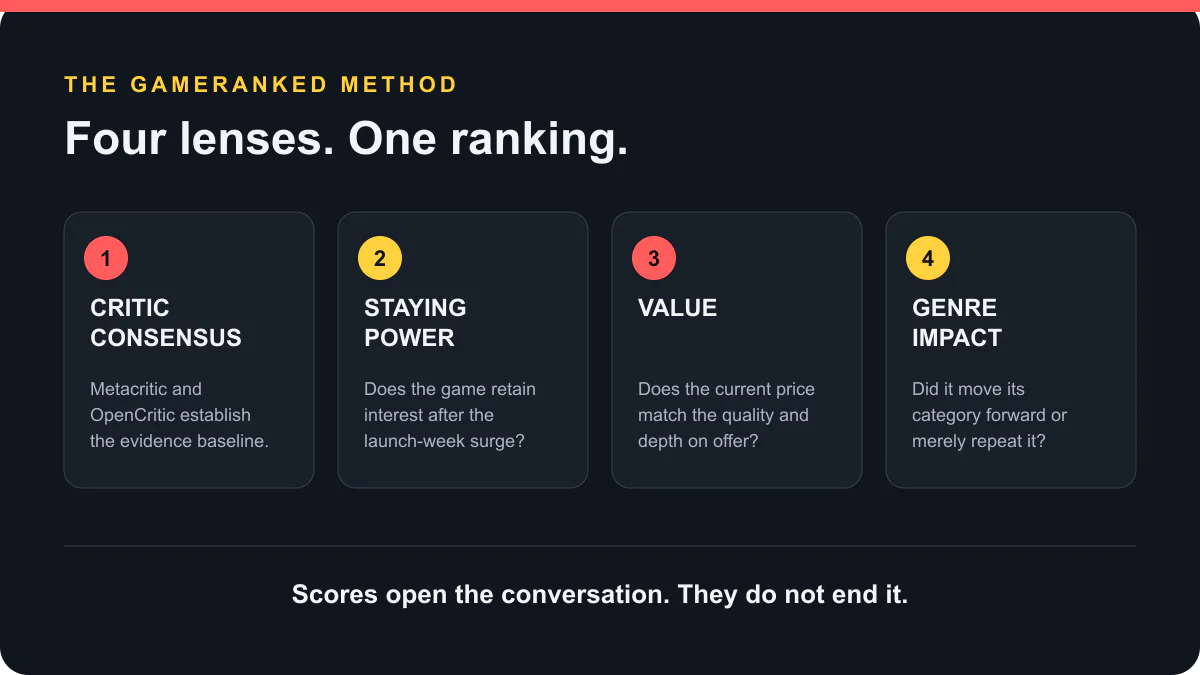
Readers do not need every ranking to agree. They need to know what a ranking measures. A list of “best games” can mean critic reception, player satisfaction, competitive depth, accessibility, value, innovation, or a personal recommendation. Those are different questions.
Publish the rubric
Name the categories, weights, date checked, and minimum evidence. If a game is scored on combat, structure, value, and accessibility, explain whether a missing feature is a zero, an unknown, or outside the scope. Keep “we enjoyed it” separate from a measured result.
Penalize uncertainty honestly
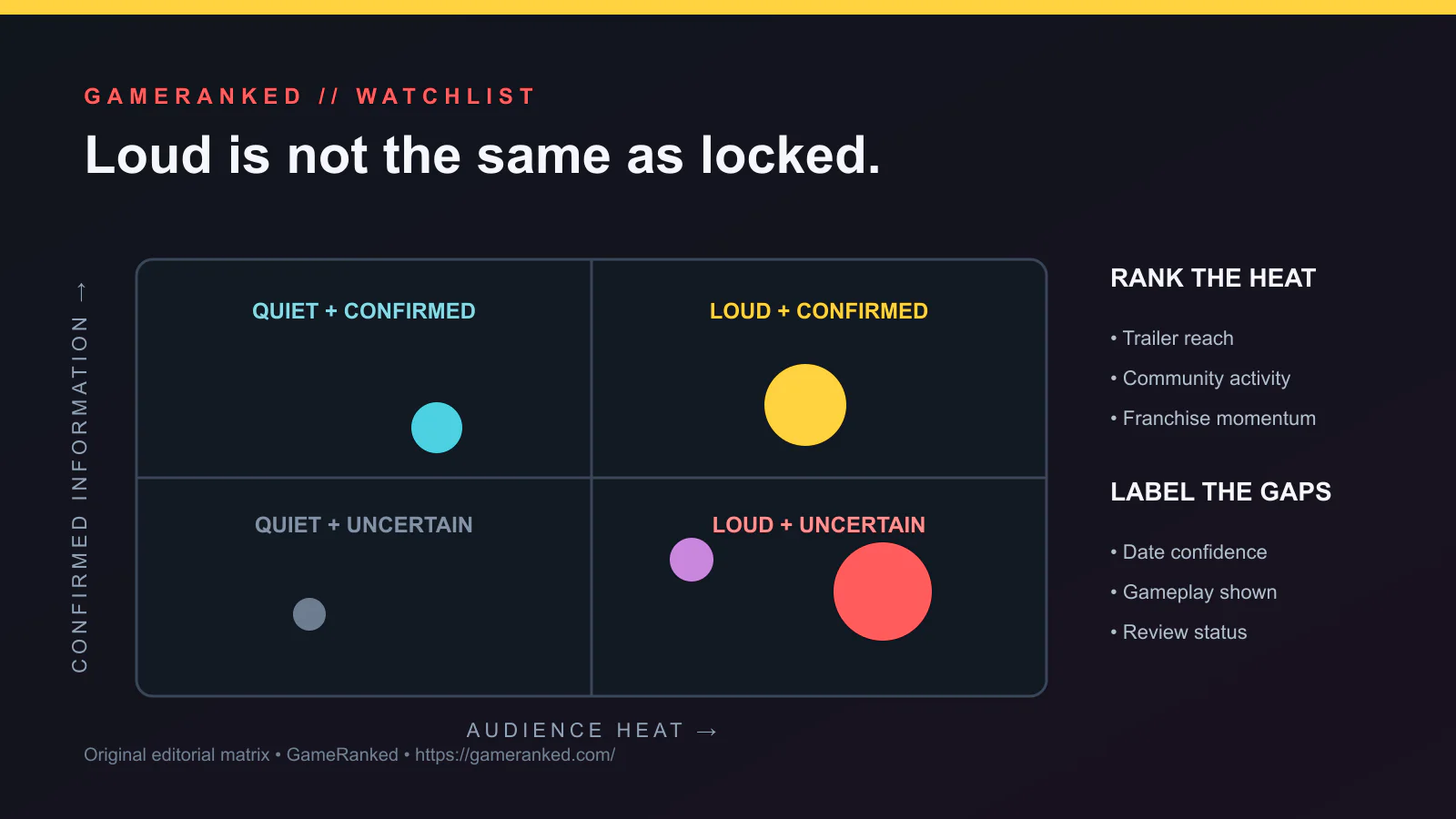
A new trailer can create excitement without proving a shippable experience. A review aggregate can summarize opinions without telling a reader whether the game fits their device, time, or budget. Add a confidence note and a source link beside the score.
Keep the time window visible
Live-service games, patches, prices, and player populations change. A ranking checked on one date should not pretend to be permanent. Record the date and schedule a refresh when the underlying evidence is likely to move.
The goal is not false precision. It is a useful decision tool that makes its assumptions easy to inspect.
Primary source
game rankingsreview methodscoringevidence